Built-in AI vector search — query your data by meaning. The retrieval layer for RAG and AI-agent memory, with no external vector database.
An official MCP server that gives AI agents shared, persistent memory — Claude, Cursor, Codex, and any MCP client working from the same facts, recalled by meaning, by keyword, or both, on your own hardware.
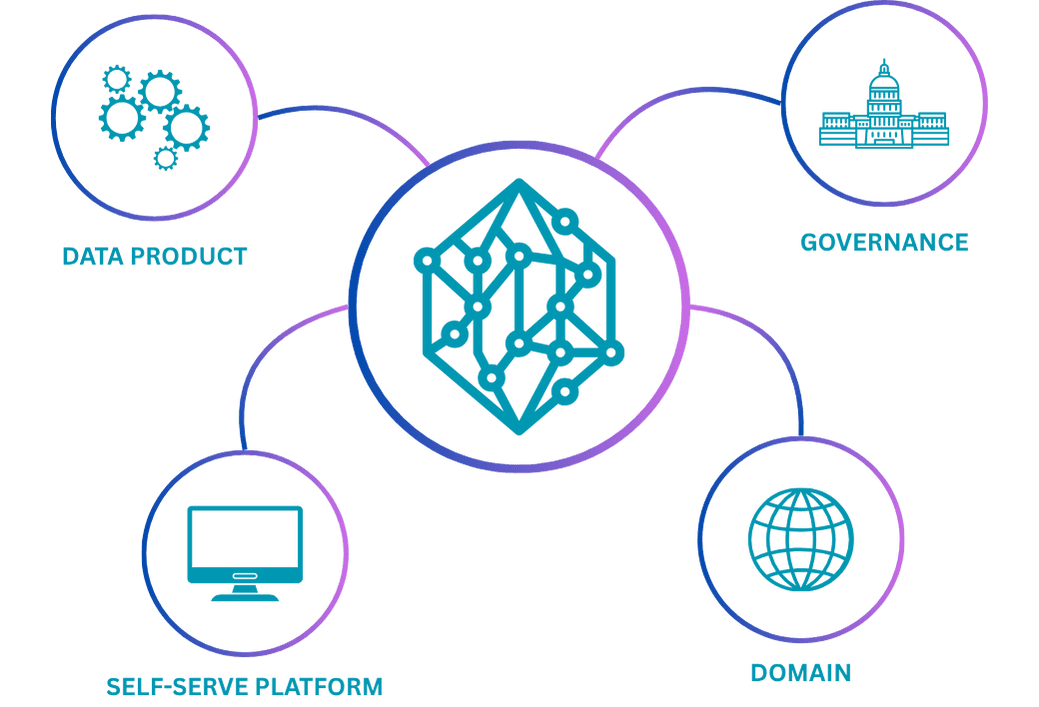
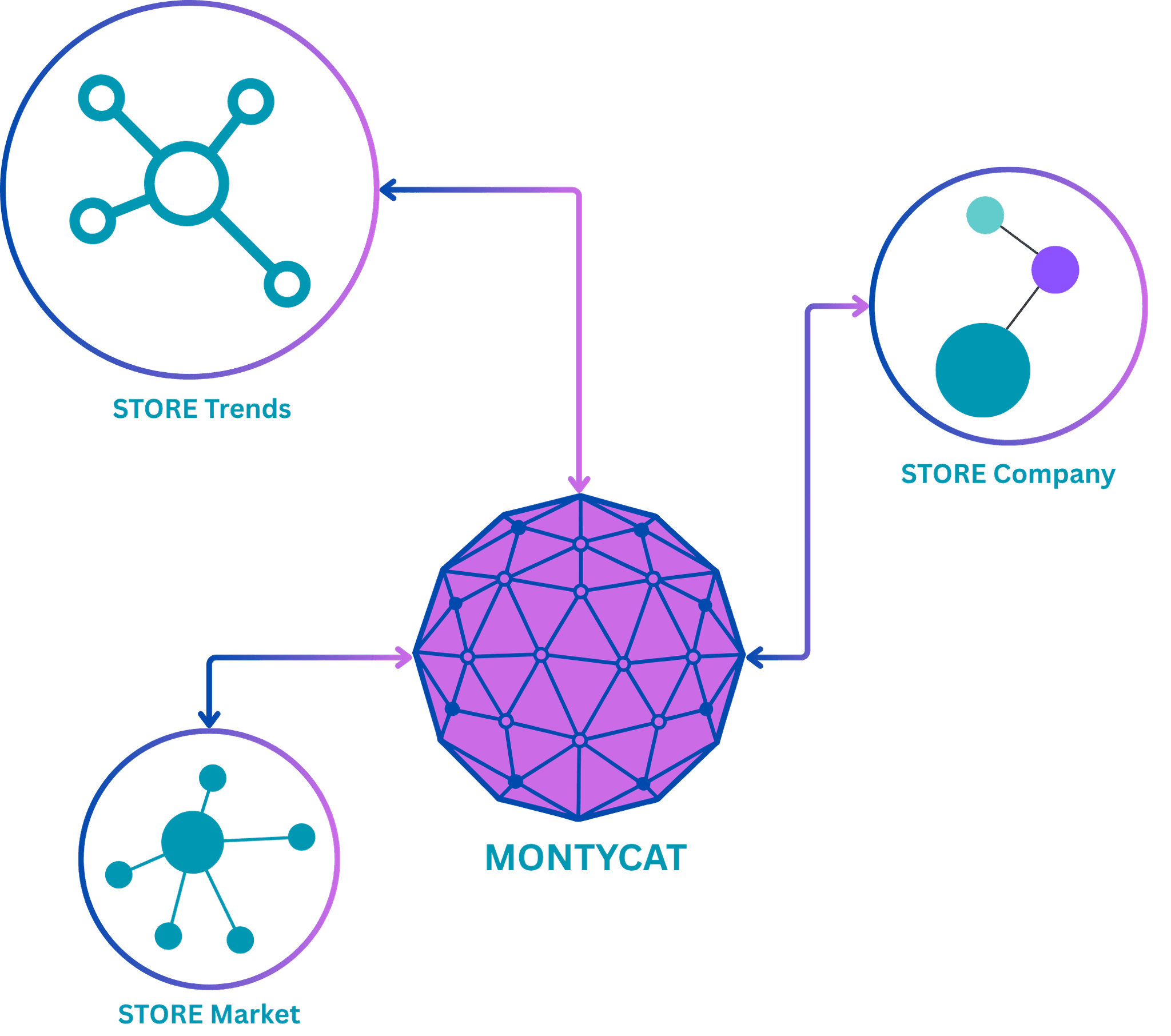
Montycat brings Data Mesh principles to modern data infrastructure
A Rust-powered NoSQL database with ultra-low latency, hybrid in-memory and persistent storage, and built-in security — engineered for distributed systems that need flexibility without sacrificing performance.
See your database, not just commands. Meow is the native desktop workspace for exploring stores, managing records, and working with Montycat semantic search from one focused interface.
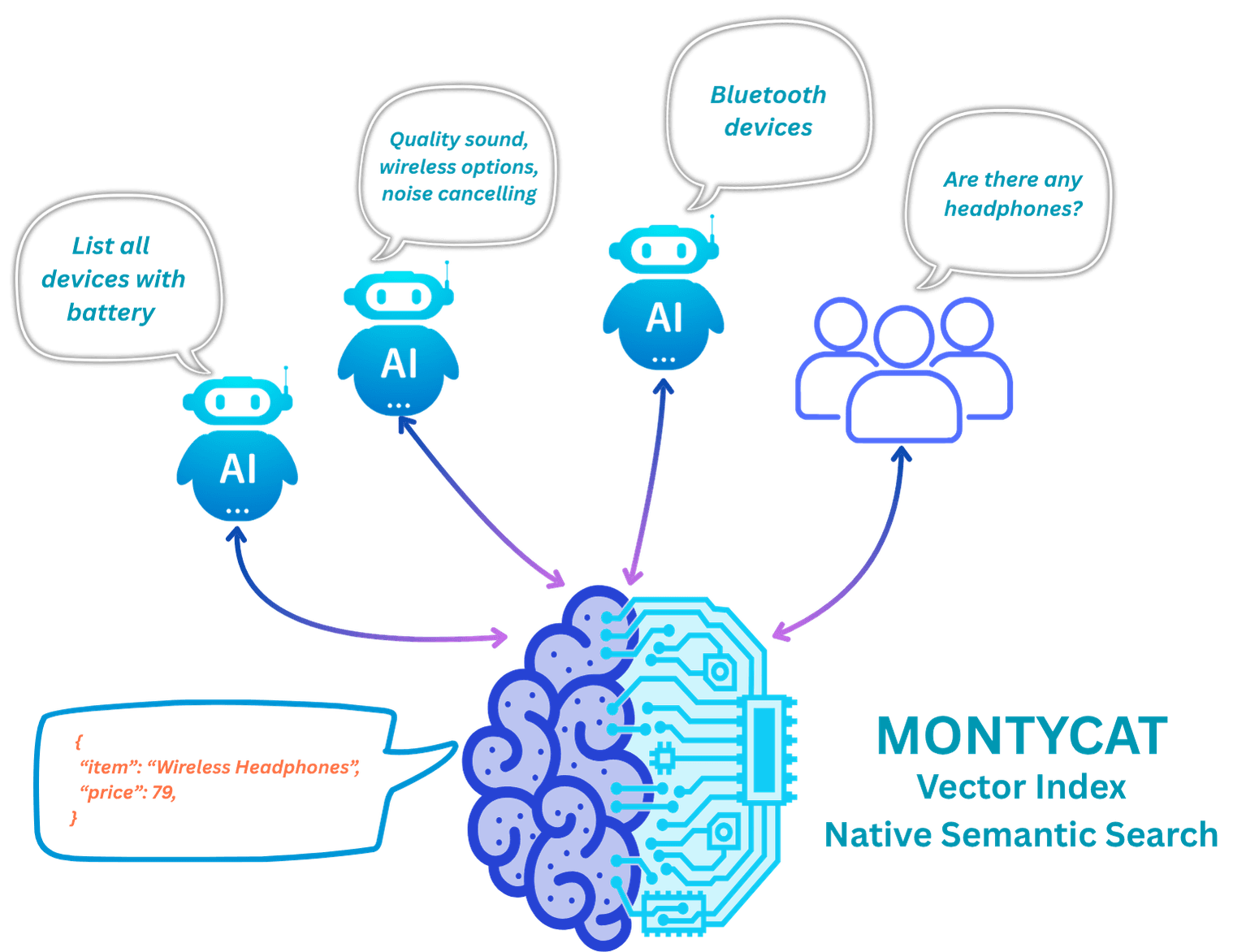
Use Montycat's onboard embedding models, or supply precomputed vectors from the model you already use. Either way, records and vectors live together in one engine and are searched through the same native vector index. Available in the semantic edition.
# Semantic search is ON by default
# in the Montycat Semantic

hits = await Products.search_values(
  query="Show all Bluetooth devices",
  limit=5
)

# [{
#    __value__: {
#      "name": "Wireless Headphones"
#    },
#    __key__: "1283…",
#    __score__: 0.82
# }]
Onboard embeddings
Montycat creates the vectors
Write your data normally and Montycat embeds and indexes it automatically with a model running on your hardware.
Automatic embedding at write time
Natural-language queries embedded by the server
No embedding API, API keys, or data egress
Precomputed vectors
Bring your own vectors
Supply record and query vectors from OpenAI, your own model, an existing vector store, or a multimodal pipeline.
The server skips embedding entirely
Any vector dimension up to 4,096
Record and query vectors use the same model
Native HNSW Search
Fast kNN similarity search over either onboard embeddings or vectors you supply.
Records + Vectors Together
Your records and their vectors in one engine. No sync jobs, no drift, no second service to run.
RAG and Agent Memory
Persistent, semantically searchable retrieval for grounded answers and long-term memory.
Self-Hosted Control
Your vector index stays on your hardware, without a managed vector database to operate or trust.
Measured on modest hardware
Performance benchmarks
Client-observed persistent-storage results, separated by how the vectors are produced.
Precomputed vectors
Search and ingestion
Intel i9-11900K · 8 cores · 32 GB RAM
2,766 QPSVector search1M persistent vectors · 1,536 dimensions1.19 ms p50 · 2.20 ms p99
Montycat MCP is a self-hosted Model Context Protocol server that turns a Montycat engine into memory your agents share. Claude, Cursor, Codex, and open-source agents on local models write to one memory and read each other's.
One memory across clients — what Claude learns, Cursor can recall.
Recall by meaning, by BM25 keyword, or both with hybrid ranking.
Inspect enforced field types before structured writes or filtered retrieval.
Self-hosted: the server, the engine, and the embeddings stay on your machine.
Data Mesh gives teams ownership of their data as products
A decentralized architecture supported by self-serve infrastructure, purpose-built to replace monolithic data lakes and warehouses with domain-driven, federated data products.
Federated governance is enforced by the engine, not by convention: a platform team delegates scoped administrative capabilities per store and per keyspace, with storage and model guardrails, explicit denials, and an auditable policy history.
Every feature is designed to remove friction between your teams and your data — from the engine core to the developer experience.
Low Latency & High Throughput
Lightning-fast data processing and retrieval, up to 1,000,000 operations per second on a single node.
Unique Architecture
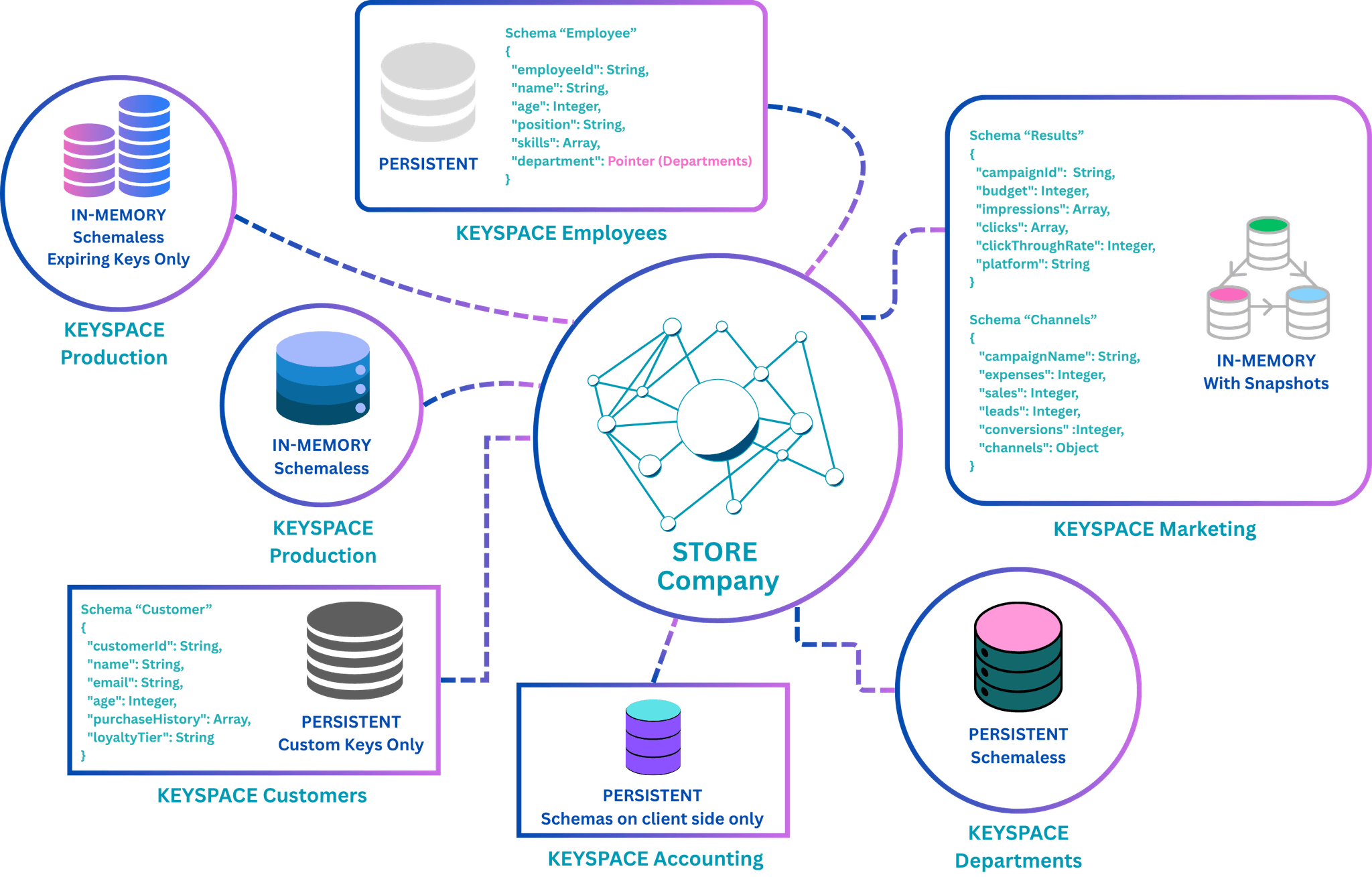
Seamlessly integrate and manage data across domains. Create keyspaces with flexible configurations and a unified view of your data landscape.
Built-in Security
TLS, RBAC, secrets management, and tamper detection — production-grade security out of the box.
Rust-Powered Core
Memory safety, no garbage collection pauses, and predictable performance for the data path that matters most.
Developer-Friendly APIs
Intuitive client libraries for Python, TypeScript, JavaScript, Dart, and Rust — no SQL injection by design.
Flexible Control
NoSQL flexibility with SQL-like capabilities: native foreign keys, optional strict schemas, and adaptable workloads.
Your data, your rules. Experience the power of flexibility.
Build Domains and Data Products with Confidence. No more monolithic data lakes.
Real-time Awareness via Subscriptions. Stay Updated Instantly.
One AI-Native Engine vs. the Traditional Database Stack
Montycat unifies records, vectors, onboard embeddings, live updates, and data ownership. See how that integrated architecture compares with databases that assemble the same workflow from extensions, services, modules, or application code.